Disputes, under Ctrl
From assessment to resolution, bring clarity, consistency and control to cases.
Trusted by some of the world’s biggest organisations
Consistency Across Every Case
Most teams are not short of effort, they are short of alignment. When disputes are managed differently across the organisation, small variations compound into bigger problems. Risk builds in the background and by the time it surfaces the window to act has narrowed. Ctrl Disputes brings everyone onto the same page. It creates structure at the start, consistency in assessment and the insight needed to move forward with confidence rather than hesitation.
Start with Structure
Disputes rarely arrive neatly packaged. Evidence sits across emails, attachments and internal systems. Timelines are rebuilt manually and critical details are often buried.
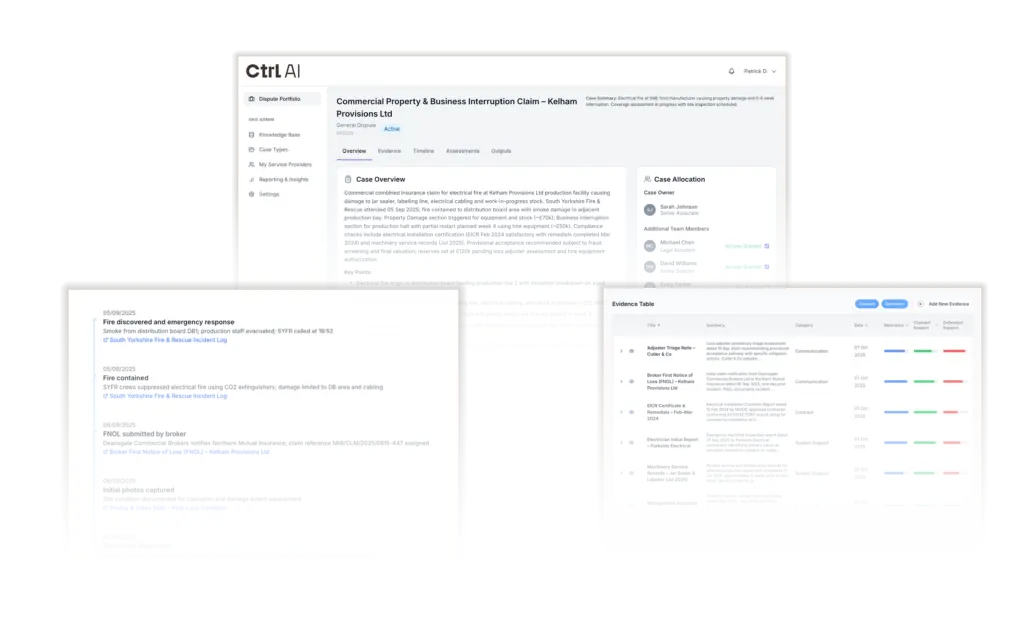
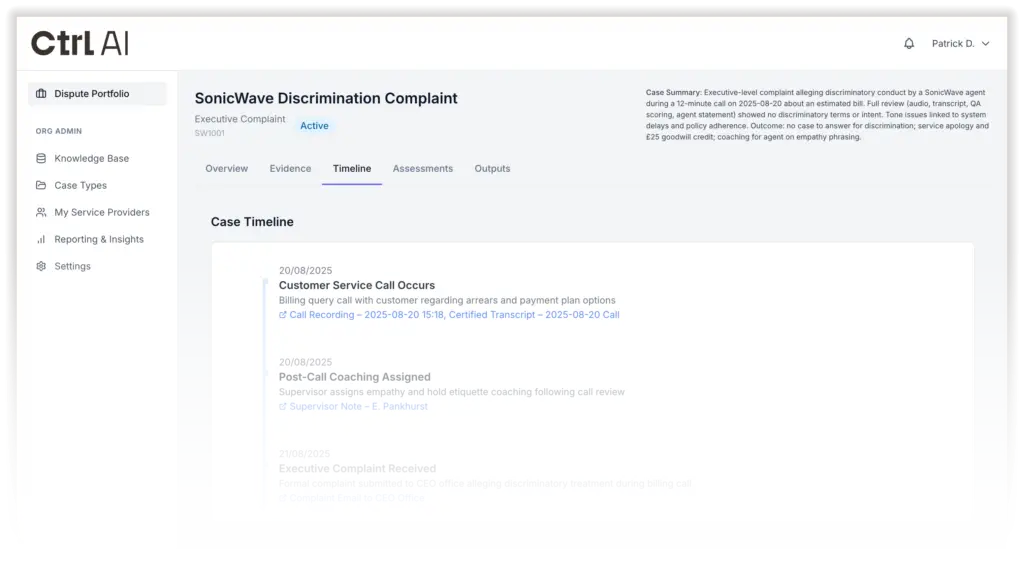
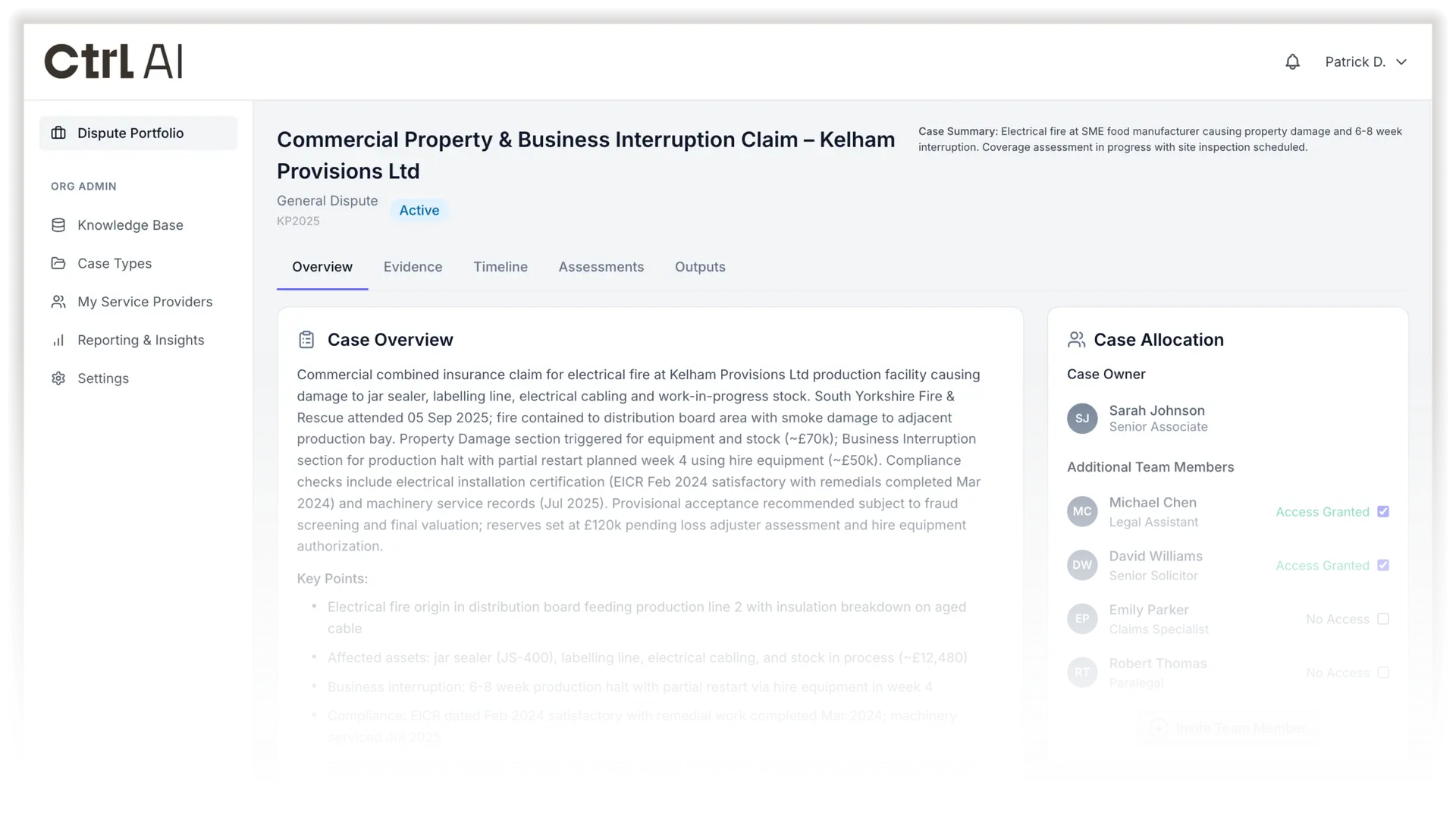
Ctrl AI brings structure from the moment a case begins. Materials are organised automatically, key events are surfaced clearly and the gaps become visible.
Instead of losing time and money piecing a case together, your team starts with clarity and can focus on judgment not admin.
Assess with Consistency
When disputes are assessed differently across teams, outcomes vary. Decisions become harder to defend and oversight turns reactive – costing time and money.
Perfectly drafted by you, Ctrl AI applies a consistent logic to every case. Each dispute is evaluated against your defined standards. The reasoning is transparent and the assessment is repeatable.
Your teams stay in control and leadership gains confidence in every outcome.
Act with Confidence
Individual case files only tell part of the story. Patterns across disputes are difficult to track and exposure builds quietly.
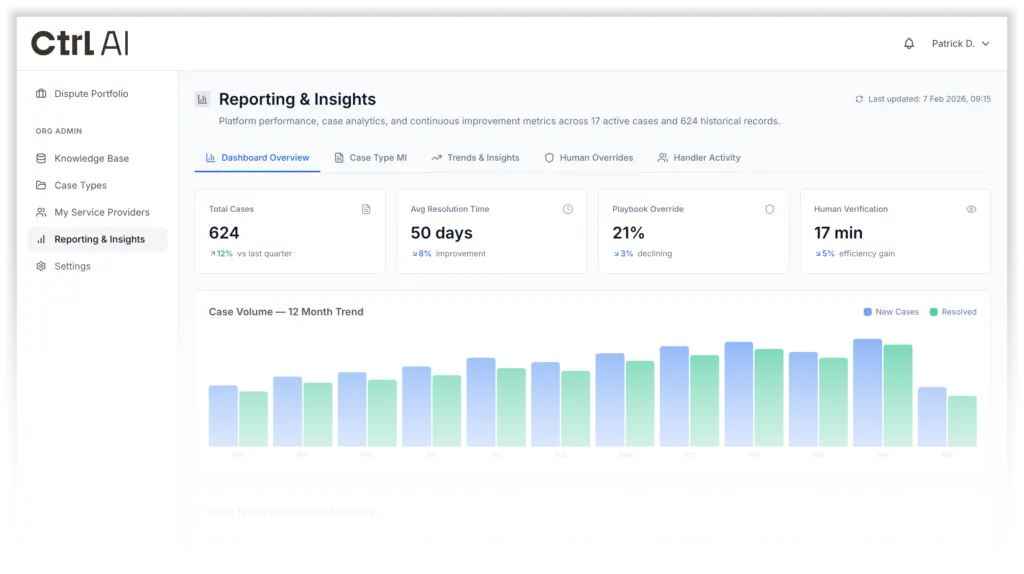
Ctrl AI gives you visibility across your entire dispute portfolio, creating trends, identifying risk and performance becomes measurable.
What was once fragmented becomes connected, and what felt reactive, becomes controlled.
Structure.
Automatically organise evidence from emails, attachments and documents into a clear, searchable case view so you start with clarity, not chaos.
Assess.
Apply the same structured criteria to every case, ensuring decisions are repeatable, auditable and aligned with your internal standards.
Resolve.
Turn case data into actionable intelligence, with emerging trends, risks and patterns that teams can act on with confidence and control.
Frequently
asked questions
What types of disputes does Ctrl AI support?
Ctrl Disputes is built for high volume and complex casework. This includes regulated complaints, ombudsman referrals, employment and tribunal disputes, claims portfolios and multi stakeholder customer disputes.
The platform is configurable to your specific case types and internal standards. If your team follows a defined assessment framework, it can be structured within Ctrl Disputes.
How fast can we see results?
Teams typically see impact during the pilot phase. Once playbooks are configured, cases can be structured and assessed immediately.
Initial environments can be set up in weeks, not months. Measurable efficiency gains often appear from the first live workflows.
How is defensibility maintained?
Every case follows a structured assessment framework aligned to your internal criteria. Chronologies, reasoning and outputs are traceable and auditable.
Decisions are not generated in isolation. They are structured against defined logic, creating a clear record of how conclusions were reached.
This supports oversight, governance and regulatory review.
Can playbooks be customised?
Yes. Playbooks are configurable to reflect your policies, regulatory obligations and assessment standards.
You control the logic. You define the criteria. Ctrl Disputes ensures it is applied consistently across every case.
This allows teams to scale without losing alignment.
What systems can you integrate with?
Ctrl Disputes is designed to ingest case data from existing systems, including case management platforms, email sources, document uploads and internal databases.
The platform complements your existing technology stack rather than replacing it. Integration requirements are scoped during the pilot phase to ensure alignment with your environment.