Dispute resolution, under Ctrl
Make consistent recommendations, faster – without compromising on quality.

Why ADR schemes choose Ctrl AI
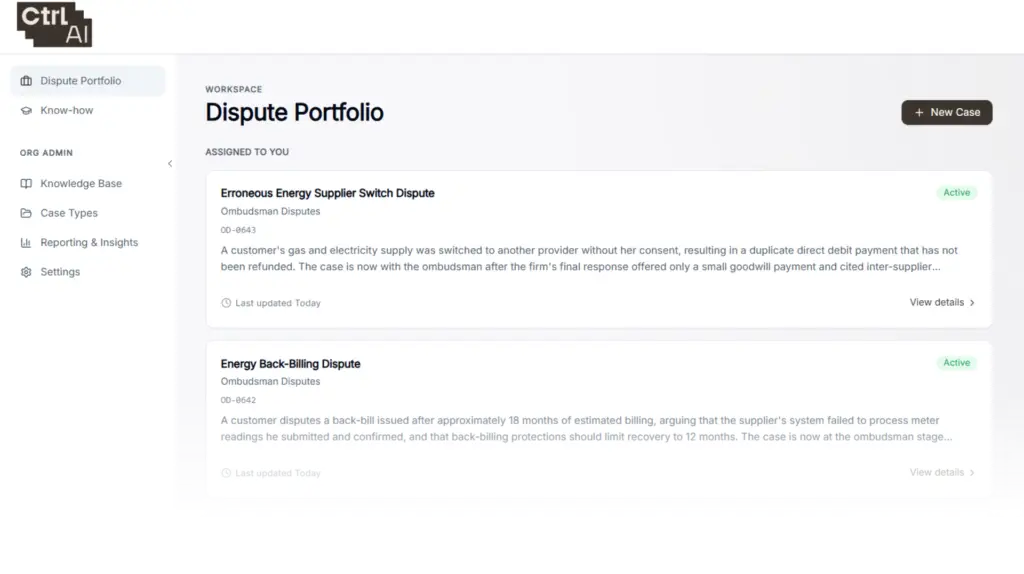
Ctrl AI helps your team produce independent, fair decisions at the pace rising case volumes now demand. Every outcome generated by Ctrl AI’s dispute resolution platform is defensible to your regulator, consistent across each handler and firmly in the hands of the people you trust to make it.
Faster cases.
Same quality of decision
Same quality of decision
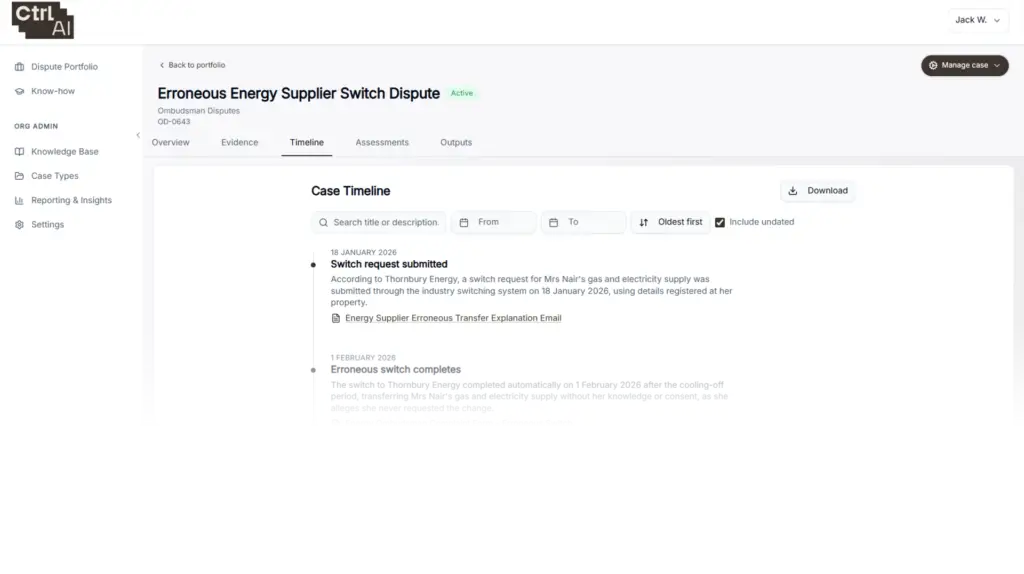
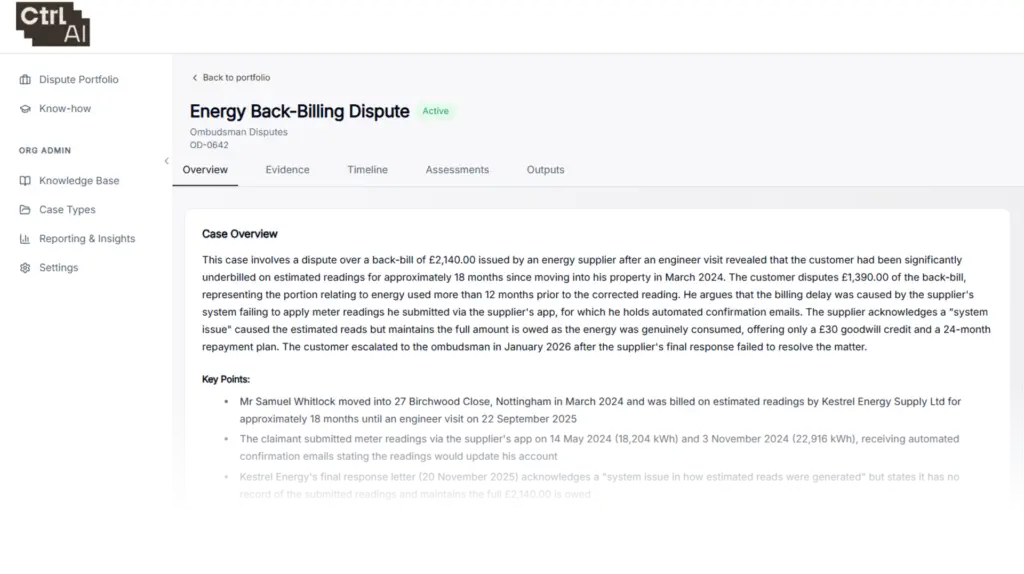
Case volumes are rising across the sector, driven by legislative change and lengthy AI-drafted consumer submissions. Ctrl AI automatically flags out-of-remit cases at intake and instantly generates a case timeline to give a clear picture of events from day one. First drafts of outputs can be produced from templates in seconds.
By taking care of all the case preparation work that doesn’t need a handler’s judgement, Ctrl AI’s dispute resolution platform dramatically reduces the time spent per case from seven hours to minutes.
Auditable end-to-end.
Regulator-ready by design
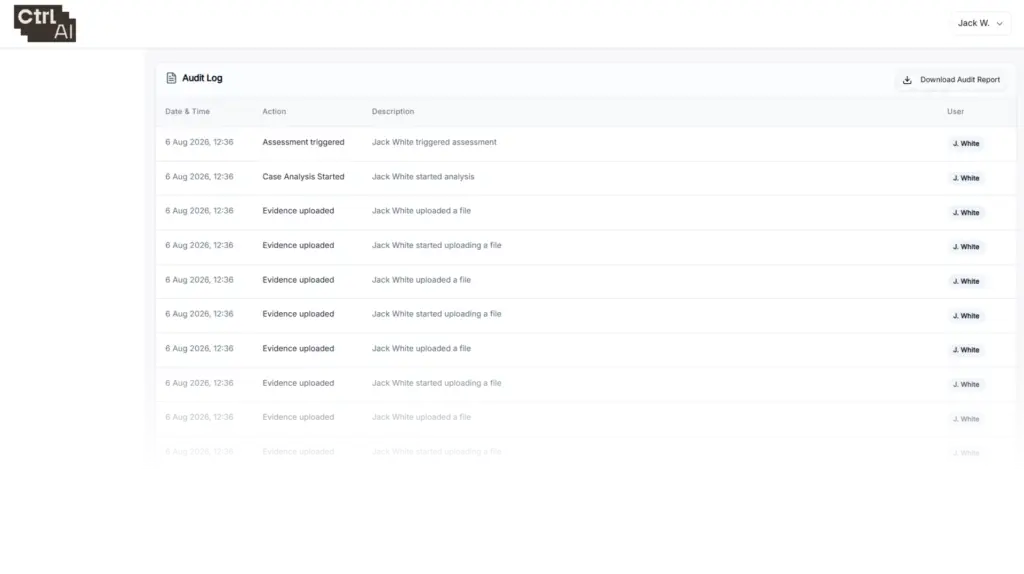
Every document ingested, every recommendation made and every handler decision is logged and reviewable. When a regulator or a member firm asks why a decision was taken, the answer is there with the evidence to support it.
Ctrl AI is built to align with the DMCC Act 2024 audit regime and the MoJ AI Principles. The platform is UK-hosted, data is encrypted at rest and in transit and your data is not used to train external models.
Same case, same answer.
Every time
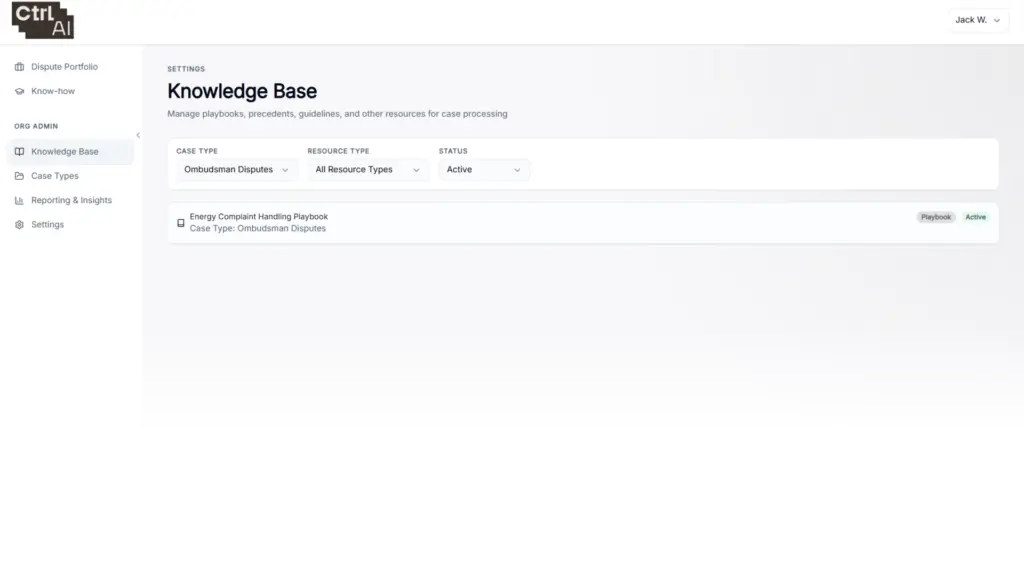
Ctrl AI is activated by your scheme’s own knowledge base – terms of reference, code of practice, scheme rules, internal guidance, sector codes. The AI reasons within those boundaries, not outside them.
Rules are applied consistently across every case for fairer outcomes. The same question gets the same answer and the same case gets the same assessment, regardless of who is handling it or when.
AI does the work.
You make the final call
Ctrl AI does the heavy lifting for your handlers – sifting evidence, building a case chronology, applying your playbook, drafting the first cut of every output – then hands it back to a named handler to accept, edit, or reject. Nothing leaves the system and no determination is logged, until a team member has signed off.
Every time a handler agrees with the AI, edits it, or overrides it, that decision is captured – giving you a feedback loop, not a replacement loop. Over time, the way your best handlers work becomes the way the system works for everyone. Your handlers train the AI, not the other way around.
Live in weeks.
Lives alongside your existing tech stack
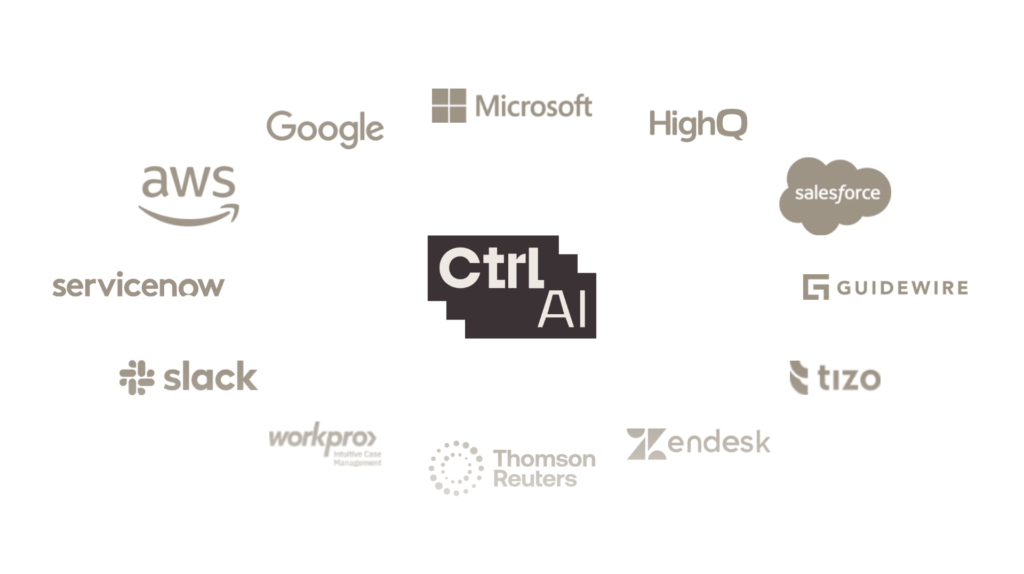
Ctrl AI is a system of action that sits alongside your system of record. It works on top of the case management system you already run – Tizo, Workpro, Microsoft Dynamics 365, ServiceNow, Salesforce – either via API or as a side-of-desk deployment if integration is heavier.
Typical implementations run four to eight weeks to live. The CMS isn’t being replaced. The IT roadmap isn’t being rewritten. You keep what you have and the AI works on top of it – which means no workflow disruption.
What our clients say
Across the schemes we operate, volumes are rising and the work is getting more complex. What drew us to Ctrl AI was the verification-first design - the AI does the heavy lifting on evidence and consistency and our handlers stay firmly in charge of every decision. It sits on top of the systems we already have and it is built around the standards a regulated scheme actually needs to meet.
Chief UK Ombudsman
Frequently asked questions
Where does our data go and how is it stored?
Your data stays in your instance of Ctrl AI in UK-hosted infrastructure and is encrypted at rest and encrypted in transit. The platform processes case data inside an isolated, encrypted environment and you control retention and deletion. A full security pack is available on request, covering ISO 27001, Cyber Essentials Plus, DPA and our infosec controls.
Does the AI train on our data?
No. The AI is grounded in your scheme’s playbooks and rules at inference time, not retrained on your data. Your cases are not used to improve external models.
Why buy from Ctrl AI when we could build something in-house?
Build will give you a minimum viable product in 12-18 months, plus ongoing AI operations headcount. We are live now, with peer schemes, on a verification-first architecture designed for ADR work specifically. You also get the benefit of ongoing R&D – model evolution, regulator alignment, new case types – without funding it yourself.
Why can’t we just use ChatGPT, Gemini, Claude or Microsoft Copilot?
Generic AI gives a different answer every time, is prone to hallucination, doesn’t hold a line on your scheme rules, has no audit trail, no evidence handling and is not regulator-defensible. Ctrl AI is activated by your playbook, returns the same answer on the same facts and logs every step. It’s a different category of software.
How does it work with our existing case management system?
Ctrl AI is a system of action that sits on top of your system of record. API integration is available for Workpro and Tizo and is possible with Microsoft Dynamics 365, Salesforce and ServiceNow. If integration is heavier than the scheme can support up front, the platform also runs as a side-of-desk deployment with no CMS changes required. Typical time to go-live is four to eight weeks.
Will this replace our handlers or hollow out the team?
No. Ctrl AI is assistive, not autonomous. By compressing the manual time on triage, chronology, evidence assembly and first drafts, your handlers spend more of their time on the judgement work only they can do. The platform is a volume-scaling tool, not a headcount-reduction tool.
Our CMS vendor says they are adding AI - why bring in a separate tool?
Case management and case assessment are different layers. Your CMS handles workflow: intake, routing, reporting. Ctrl AI handles reasoning: evidence, assessment against your rules, drafting. They are complementary. CMS-vendor AI roadmaps tend to focus on triage and workflow, not the structured assessment work where Chief Ombudsmen need defensibility.
What does a typical implementation look like?
Three stages. A proof of concept where we run a small number of your real cases through the platform without configuration, so you can see how it reasons. Then an AI configuration phase – typically thirty or so cases – where we build your playbook into the platform and you confirm the outputs match the position you would take. Then go-live. End-to-end, four to eight weeks is typical at a private-sector scheme.
How is Ctrl AI priced?
Per case, not per seat. Cases are bought in an annual allowance, paid monthly, that matches your forecast volume. Total contract value typically lands between £20k and £200k a year depending on case volume and the number of case types configured. We can share a pricing one-pager on request. We also encourage clients to on-board on a flexible commercial structure which is aligned with realising value and meeting ROI targets.